THE GEO-SPELEOLOGICAL SITE IN THE MUNICIPALITY OF NUXIS
The geo-speleological archaeological site "Sa Marchesa" is located in the municipality of Nuxis in the former Sa Marchesa mine and is situated in the last excavation of the homonymous mining concession from where the geological sequence of the lower Sulcis can be seen, ranging from the Lower Cambrian to the Cenozoic, both volcanic and continental.
At the site there is an outdoor area highlighting a "geological garden" consisting of geo-mineralogical representations and related descriptions through panels with particular attention to the lithostratigraphic sequence of Sulcis. To complete this description, a lithostratigraphic column composed of rock samples outcropping in Sulcis and a monument commemorating the miners who died in the mine have been prepared.
· THE ACQUACADDA CAVE OR SU MONTIXEDDU CAVE
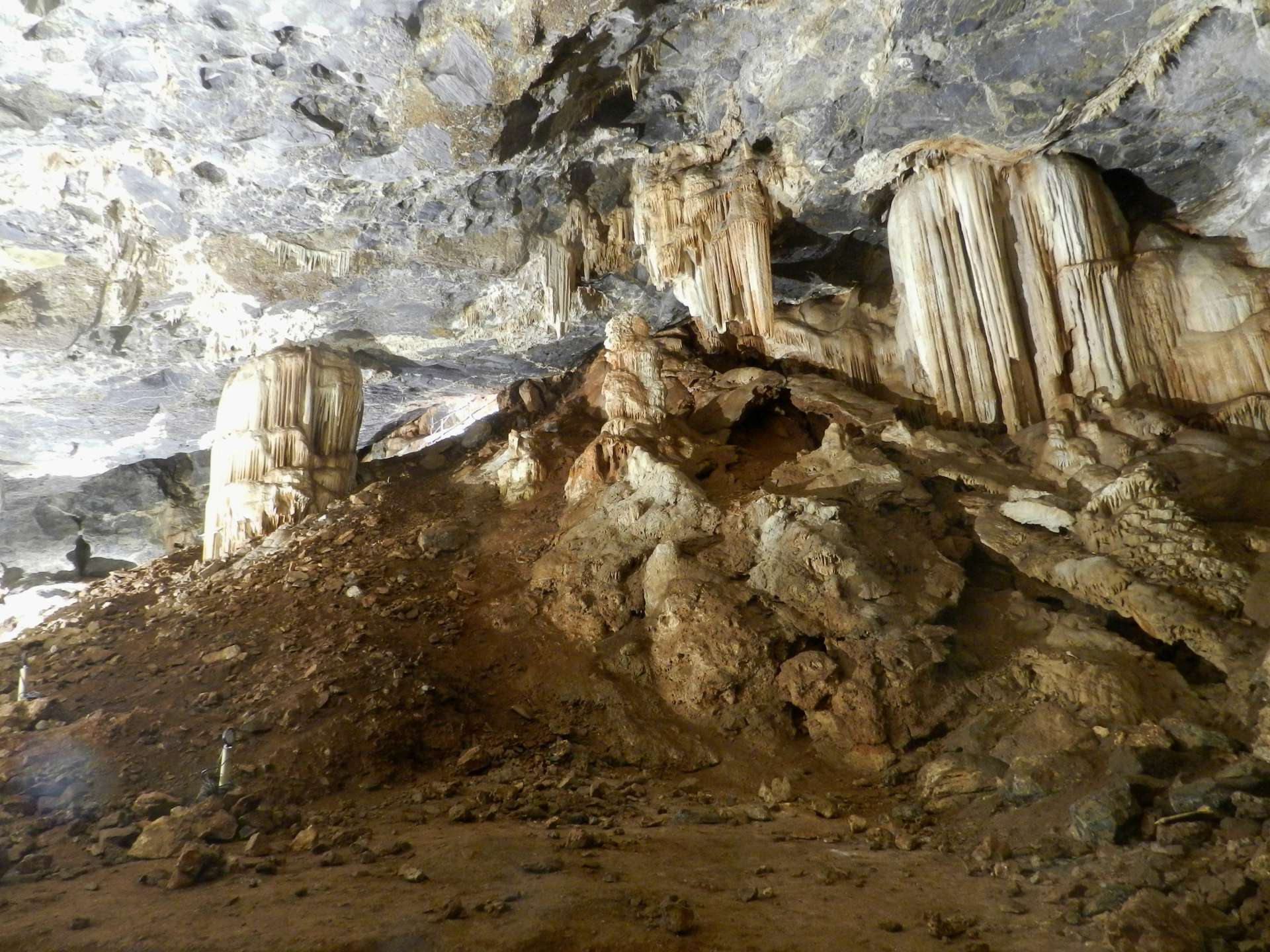
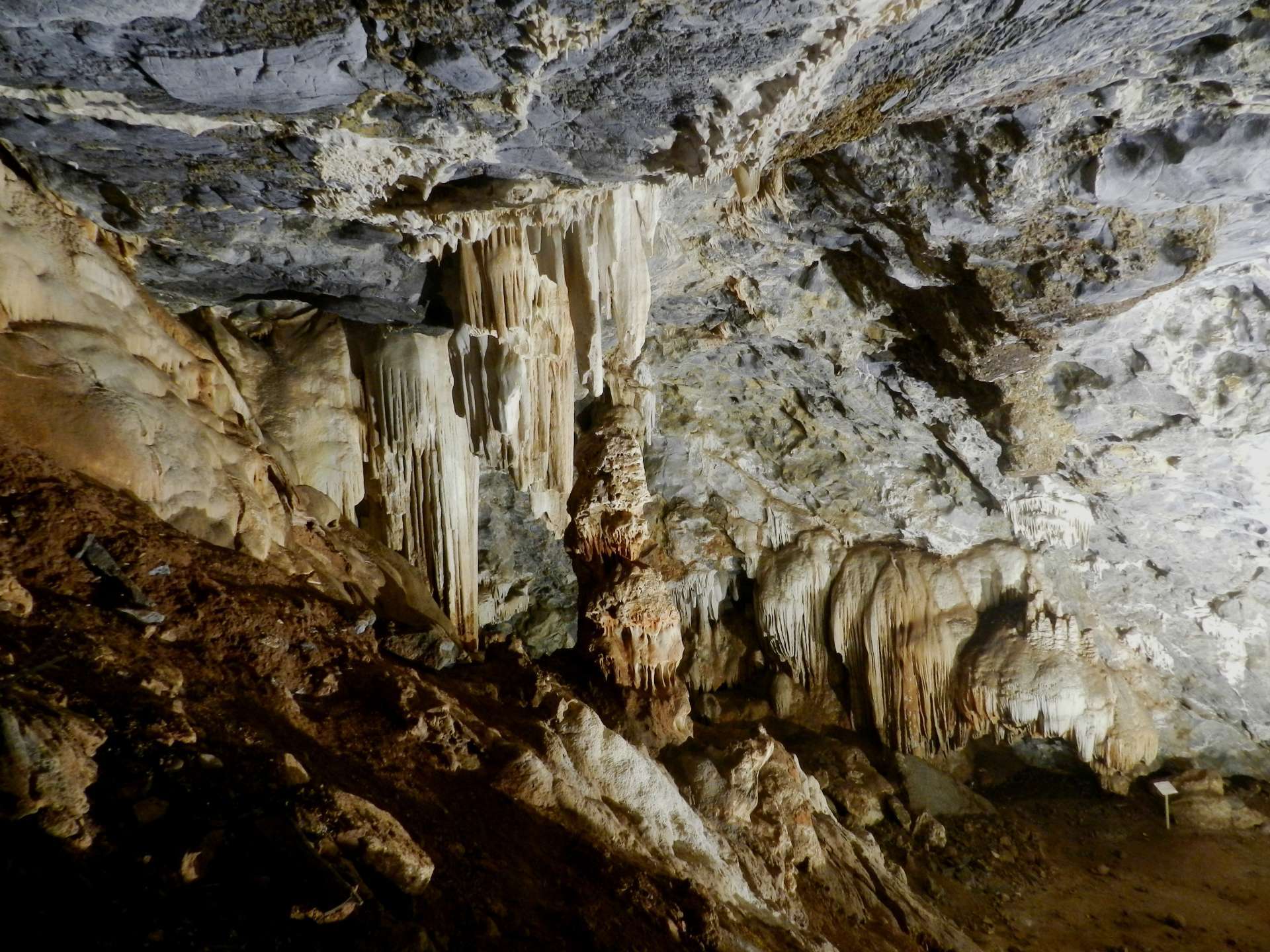
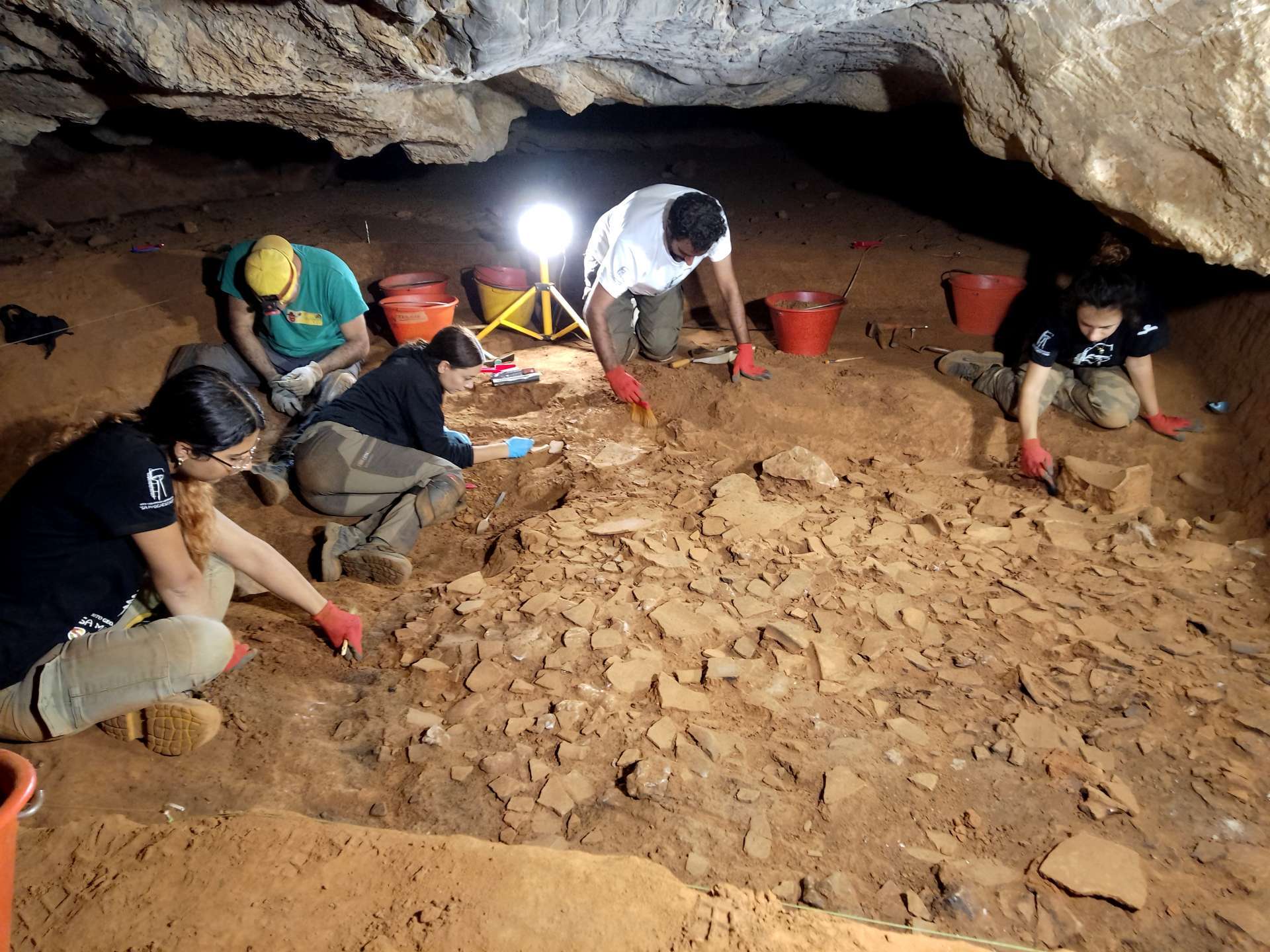
The cave has been recognized by ISPRA as a geosite of national interest and by the Autonomous Region of Sardinia as a Natural Monument. In this adequately lit cave, geological and geomorphological features can be observed (stalactites, stalagmites, flows, canopies, cave pearls, etc.). Among these is a unique Paleozoic conglomerate that marks the transition between two geological formations of the Lower Cambrian, morphologically hypothesized as a Cambrian submarine landslide on which the natural cavity is based, making it unique. Inside it, archaeological excavations are being carried out by Professor Riccardo Cicilloni of the University of Cagliari, which have uncovered important and unique evidence attributable to the Copper Age and more precisely to the Monte Claro Culture.
· THE GEO-SPELEOLOGICAL MUSEUM
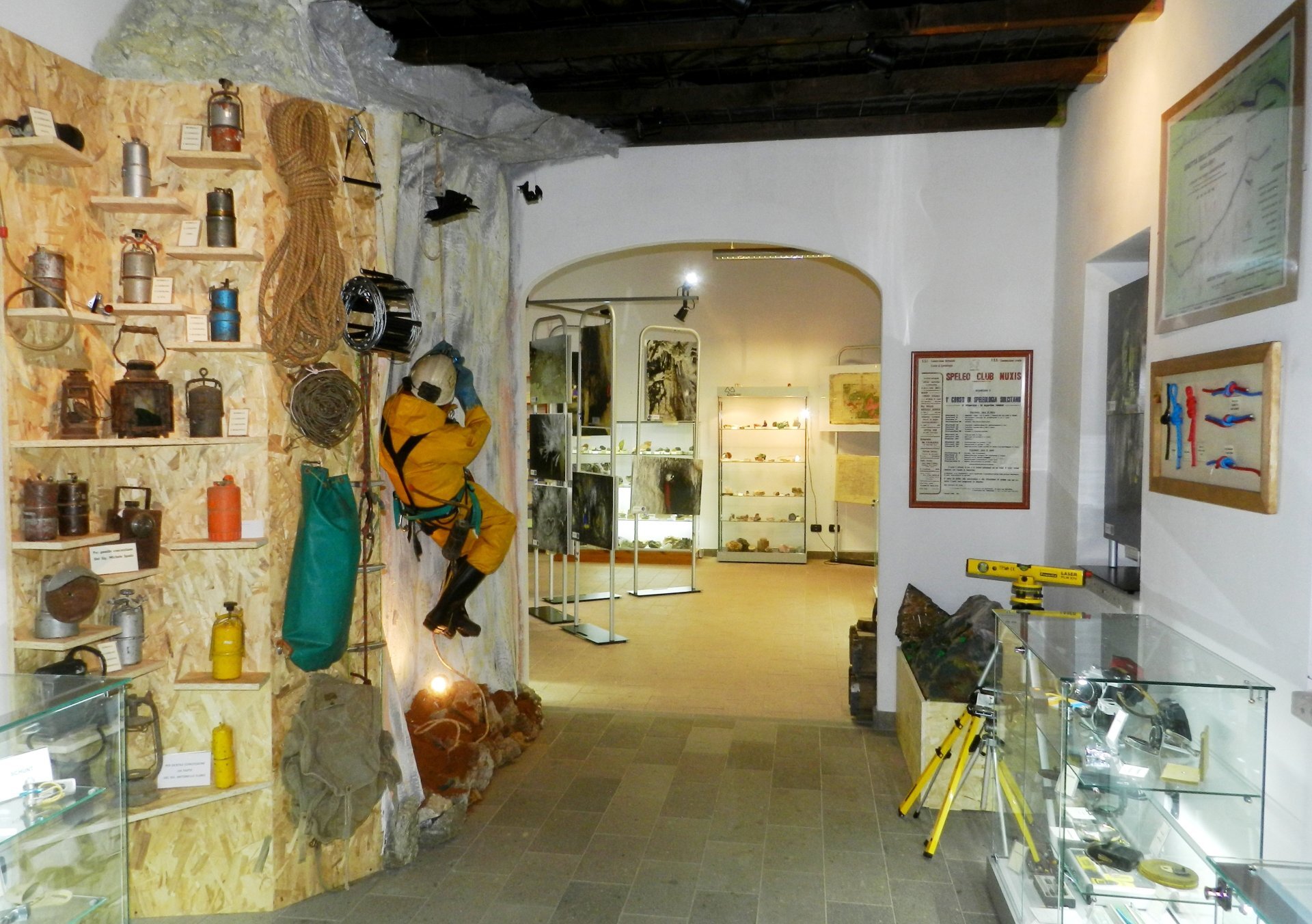
The geo-speleological museum, unique of its kind, consists of three rooms. The first is dedicated to geology where polished rock samples representing the lithological outcrops of Sulcis are displayed. In the same room, two small collections of local minerals and Sardinian fossils can be seen, as well as an exhibition of cores (rock cylinders) and various tools and instruments used for both extraction and geological and geognostic activities, including hammer tips and widia and diamond crowns for drilling, all surrounded by a series of photographic panels depicting the caves and mines of the area. In a second room, equipment used for speleological activities is displayed in illuminated showcases, such as progression in caves both on ropes and horizontally, topographic surveying, and a beautiful collection of lamps.
In a third room, the main and representative ceramic elements faithfully reproduced, mainly found in hypogeal environments representing the main prehistoric facies from the Early Neolithic to the Recent Bronze Age - Iron Age, are exhibited. On one wall, reproductions of hominin skulls representing human evolution are displayed.
For the visitor, it will be a unique experience because it connects knowledge of different disciplines, starting from geology, mining activity, and archaeology, all illustrated by knowledgeable guides. It will certainly be an unforgettable experience.


 Languages
- DE
- EN
- ES
- FR
 Offer Entrance
The experience of our guests
Thank you for your feedback!
-
Overall Experience
-
Service Quality
-
Environment Cleaning
-
Comfort and Atmosphere
-
Value for money